
Every year around this time the phone starts ringing about water heaters. Nothing changed in the house. The tank is the same tank it was in July. What changed is the water coming into it.
Once Georgia gets a few cold nights in a row, the water coming in from the street or the well runs a lot colder than it did in summer. The heater has more work to do on every gallon, so recovery slows down. A tank that was a little undersized, or a little tired, gets by fine all summer and then comes up short the first week of November. Add family in town for Thanksgiving and you’ve got a callback waiting to happen.
“It runs out of hot water” is usually not a broken heater
Before you condemn the tank, rule out the cheap stuff:
- Check the thermostat setting. Homeowners turn it down in summer and forget.
- On electric units, test both elements and both thermostats. A dead lower element still gives you hot water, just not much of it.
- Look at the dip tube if the water goes lukewarm fast. A broken one dumps cold water at the top of the tank.
- Ask how old the tank is and when it was last flushed. Sediment buildup cuts usable capacity and makes gas units rumble.
- Count the people. If the household grew and the tank didn’t, that’s a sizing conversation, not a repair.
When it’s time to replace, size for winter
Size the replacement for the coldest month, not the one you’re standing in. A customer who was happy with a 40 in August may need a 50 in January, especially with a big soaking tub or teenagers in the house. Talk it through before you write it up. It’s an easier conversation now than after the second no-hot-water call.
Look at the install too. Most of the replacements we see go back in as the same fuel and venting type, but check before you load the truck:
- Atmospheric gas units need a vent that still drafts properly. Old, oversized or orphaned flues cause trouble, especially once the furnace was swapped to a 90% and the water heater is left alone in the chimney.
- Power vent units make sense when there’s no good path up and out. Confirm you have power at the location.
- Electric swaps: check the breaker and wire size against the new unit’s nameplate, not the old one.
- Measure height. Short versus tall matters in closets and under stairs.
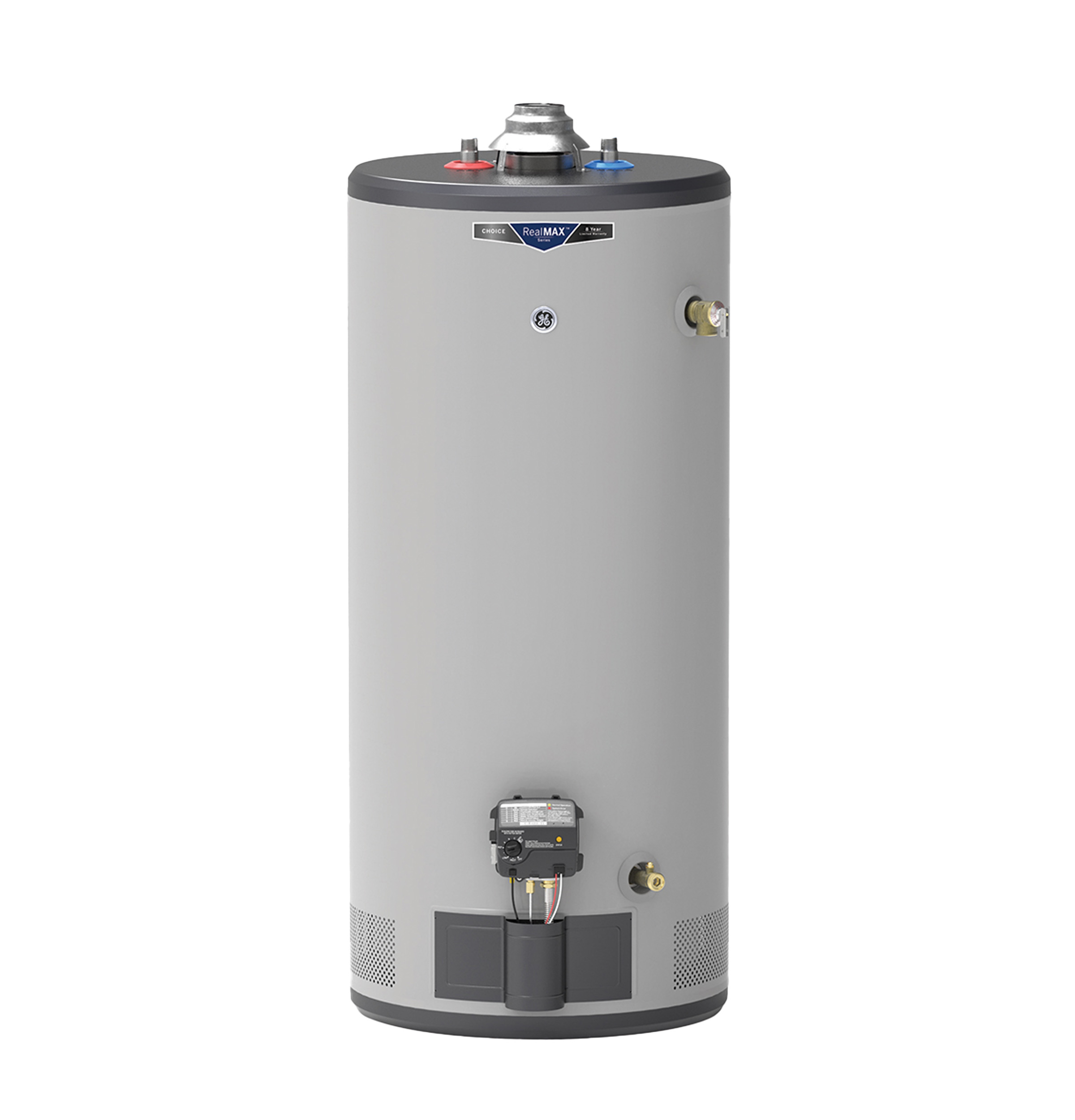
We stock GE gas atmospheric, gas power vent and electric water heaters in a range of sizes. Live stock by store shows on the product pages.
Don’t forget the small parts
Most water heater jobs that run long are waiting on a fitting. Before you head out, grab the stuff that turns a two-hour swap into a four-hour one when you don’t have it: flex connectors, a new gas cock and sediment trap, dielectric unions, a T&P discharge line and an expansion tank if the system is closed. We carry gas piping and fittings at the counter, so you can put the heater and the parts on one order.
Order it ahead, pick it up staged
If you’ve got a no-hot-water call at 7:30, order from the truck and the heater and parts will be staged at the counter in about 30 minutes. Save the parts you always need as a job list and the next one is a couple of taps. If you’d rather not leave the job, ask about our daily job-site delivery runs.
Already have an account? Log in to see pricing. Not set up yet? Apply for a contractor account or stop by the counter at 278 Nunnally Rd SE in Winder, Monday through Friday, 7 to 5. You can also call us at (770) 363-3124.